I was sitting here pre-coffee working this morning, contemplating the past year, mostly the struggles and tribulations, and yet, feeling immensely overwhelmed at how blessed we have been.
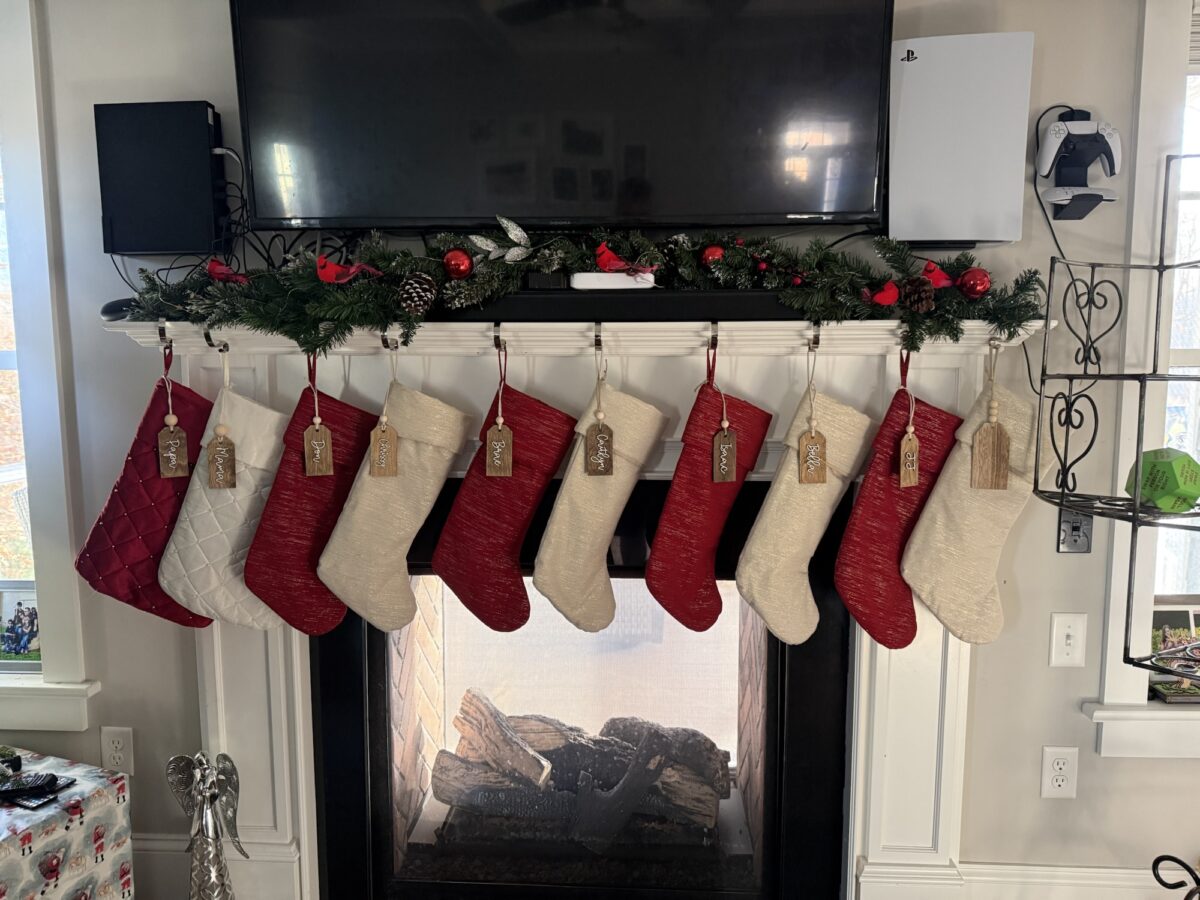
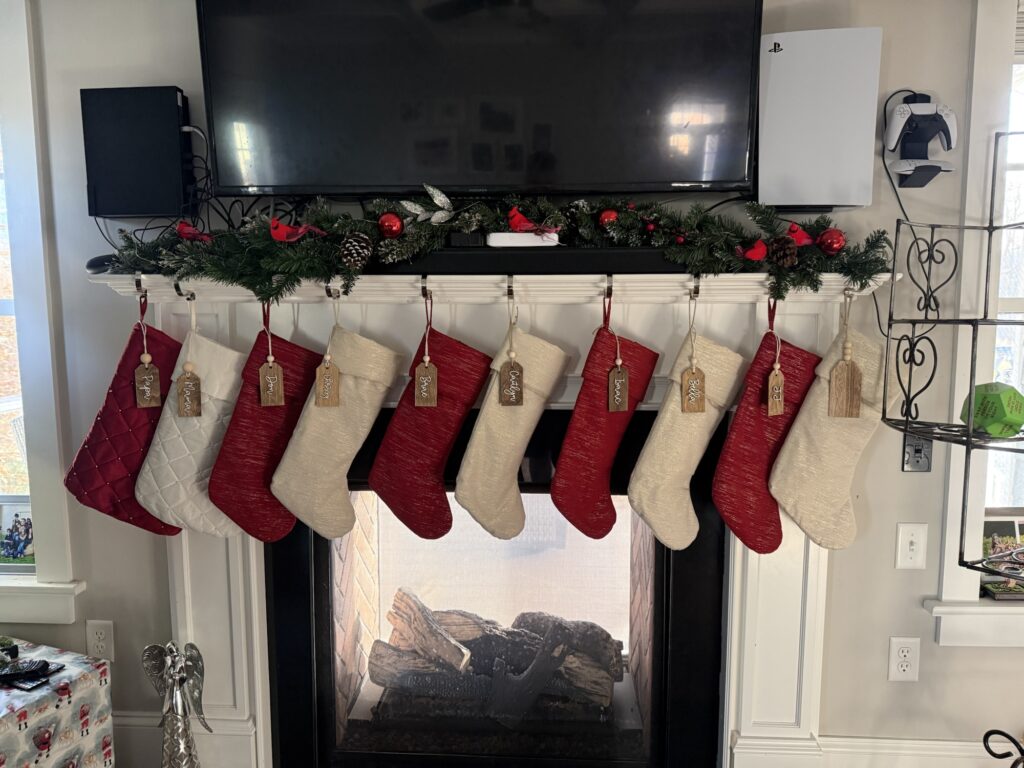
As I stood up to get my second cup of coffee, I glanced over and saw this… how can one not be thankful facing down the day knowing that this is the “why” it all matters.
This reminds me of the Psalm:
Blessed is the man whose quiver is full of [arrows]. They will not be put to shame when they contend with their opponents in court.
Psa 127:5.
But what struck me most odd, is there are only 8 people living under my roof – 9 if you count the youngest daughter’s boyfriend, who is almost always here, and almost as much of the family.
But the 10th stocking confused me. I went to turn over the name tag, and turned it over again. Whose stocking is that? I think the wife uses it for the pets, right?
Who else is living here, that I don’t know about… is that why the utility bills are so high?
I’ve been staring at Ben’s videos for the last 6 or so months and really wanted to dig a little deeper.. however, with as much knowledge and experience as I have with technology, I really don’t (didn’t..) understand electricity at all, except for the experiences I’ve had with accidentally grounding out light switches in the gang box, because I didn’t realize the electrician had sourced multiple circuits into the same box.. *poof*
What I did know, however, is that electricity is dangerous, and while I had a basic level of understanding electricity, and a pretty solid understanding of how digital circuits work, and how a computer is pieced together from thise circuits, I had no idea how actual electricity flows through all the different components to build up to a functional computer.
For example: what is a transistor, how does a resistor work, what about a diode, or a FET, how do capacitors work… how about electrical flow in circuits that are parallel, or in series, how do you “size” your circuits correctly?
I understood high-level differences with AC and DC, but how do you convert from one to the other, and why use either? The list goes on and on and on.
So, I started with an 11 hour course on Udemy from Ian Juby, on Electricity and Robotics, then I spent hours and hours and hours on youtube watching follow up videos, and demonstrations around Ohms law, impedance and the likes.
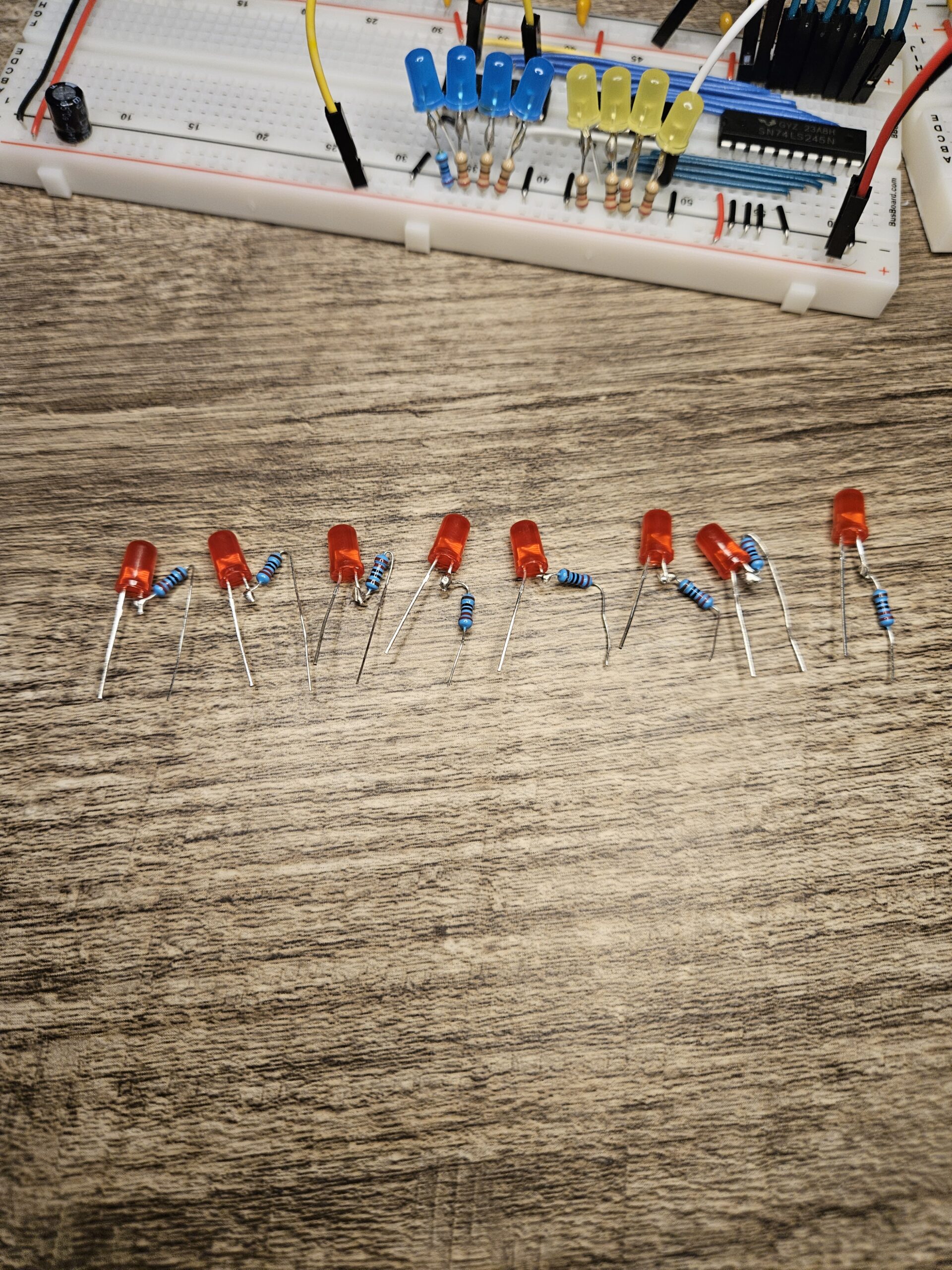
Now, I finally feel ready to start on my 8 bit computer from Ben, and confident I won’t electrocute myself. I’ve even started soldering components for the first time on my life – the first time was pretty ugly, but I quickly leveled-up.
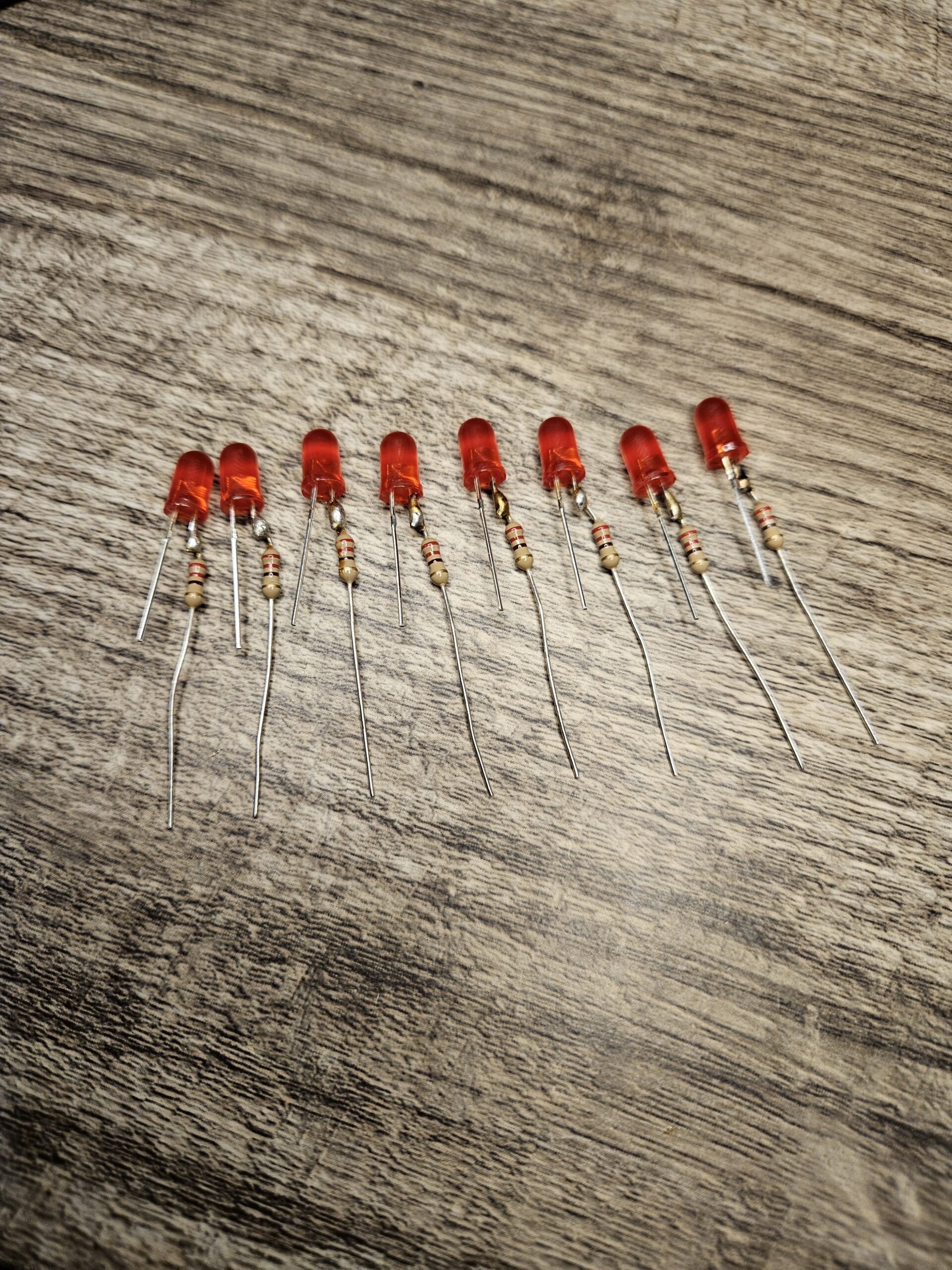
Initial Attempt at Soldering resistors on LEDsAfter a few times soldering – it’s not so bad!
I’ve also chosen to use lead-free solder; I don’t spend all my free time trying to boost my brain capacity just to smear lead all over my hands, which means I’ve had to run my soldering iron at 750 degrees!
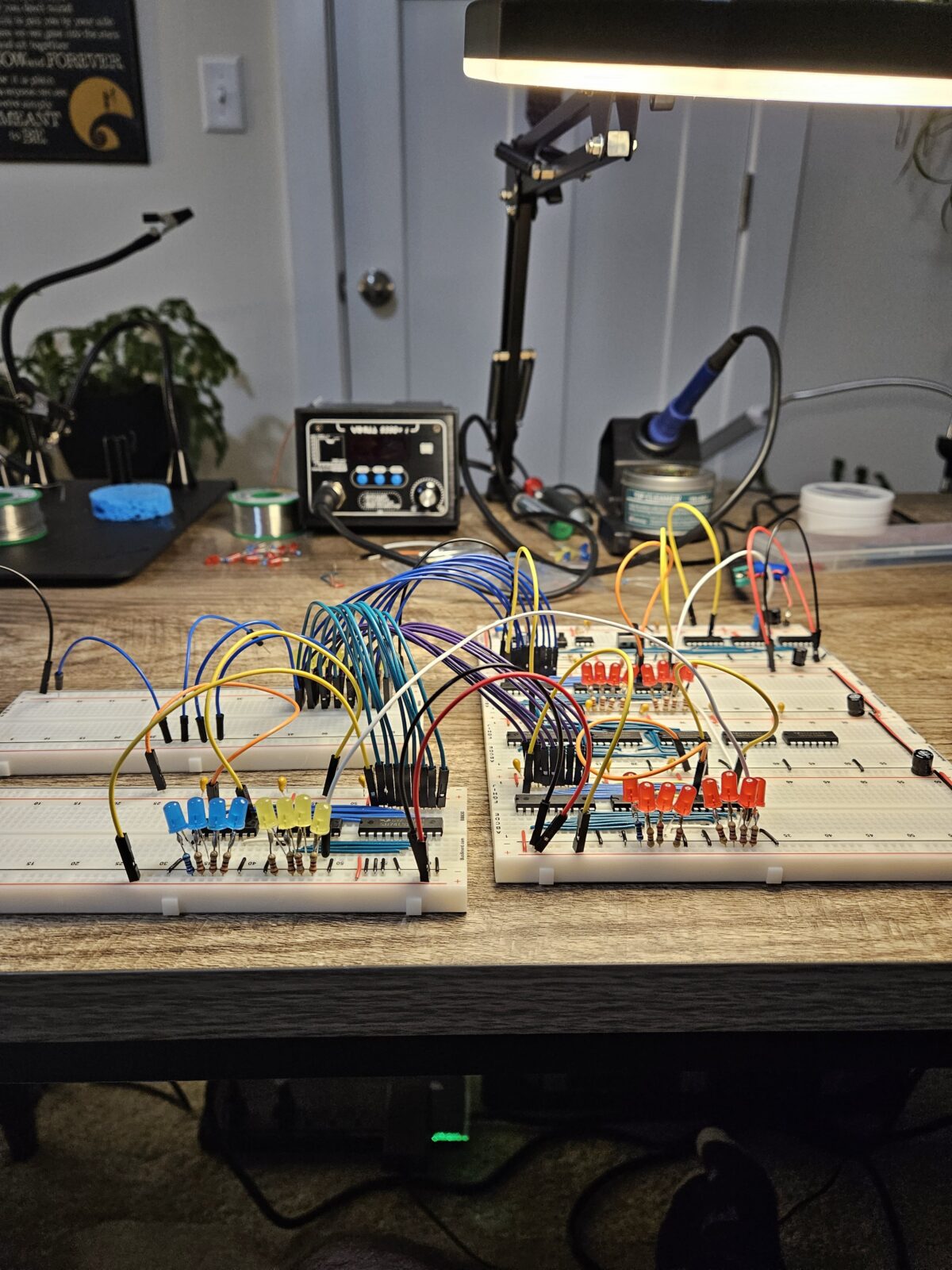
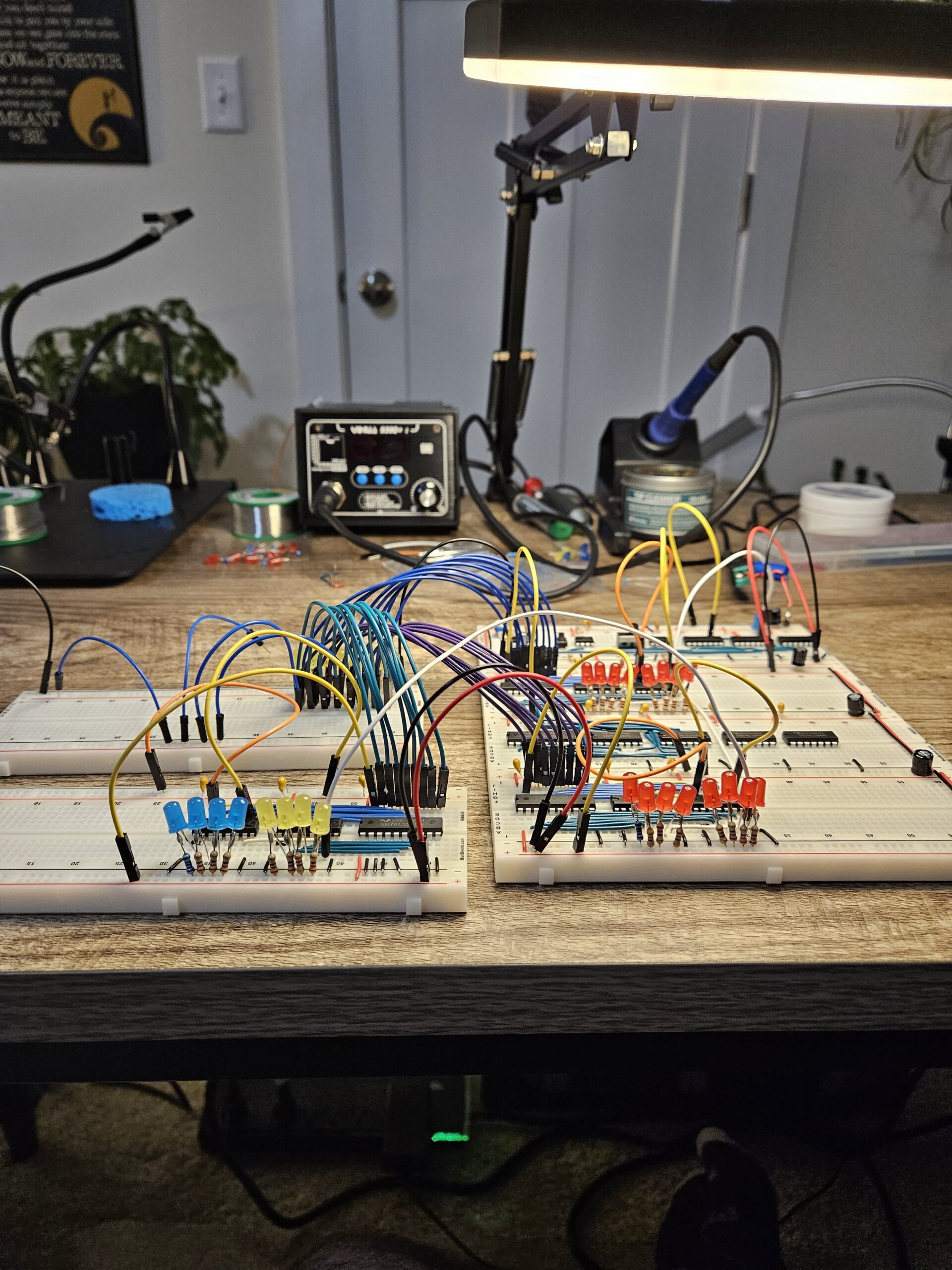
Anyway, I’ve got a pretty good start on the 8-bit; I’m likely to spend most of my vacation working on it.
Some things never change – this is what my vacations usually look like: